
How did you feel before starting school?
I had always been a pretty bright student – always in need of intellectual challenge. Learning French while being immersed in the French classroom and also having to keep up with regular classes fulfilled that need.
I remember the first time I visited the primary school, when we signed on with the headmaster. I poked my head into my future classroom and saw the blackboard. Wooden desks with inkwells lined up in rows. Old wooden cubbies at the back of the room. Although I had grown up in a rural part of the UK, each classroom of my British primary school had been fitted with computers and a smart-board. Whiteboards were the norm, our tables were arranged in groups. The rooms were renovated regularly and decorated with art projects.
This French classroom looked like it had hardly been touched in a century. Any attempt at decoration seemed austere.
 My classroom in France |
 My classroom in the UK |
I can still remember my first day of school. Up at the crack of dawn, I was so excited to get started, make new friends. I was one of those nerds that loved school anyway, I had been missing it after nine months of homeschooling.
How did you integrate in school?
I had never had to start a new school before. In the UK, my classmates had mostly known me since pre-school. My curly hair and buck teeth weren’t anything special to them, but the French children not only pointed out these flaws, they seemed utterly bewildered by them. I’m convinced that some of them had never even seen a curl before.
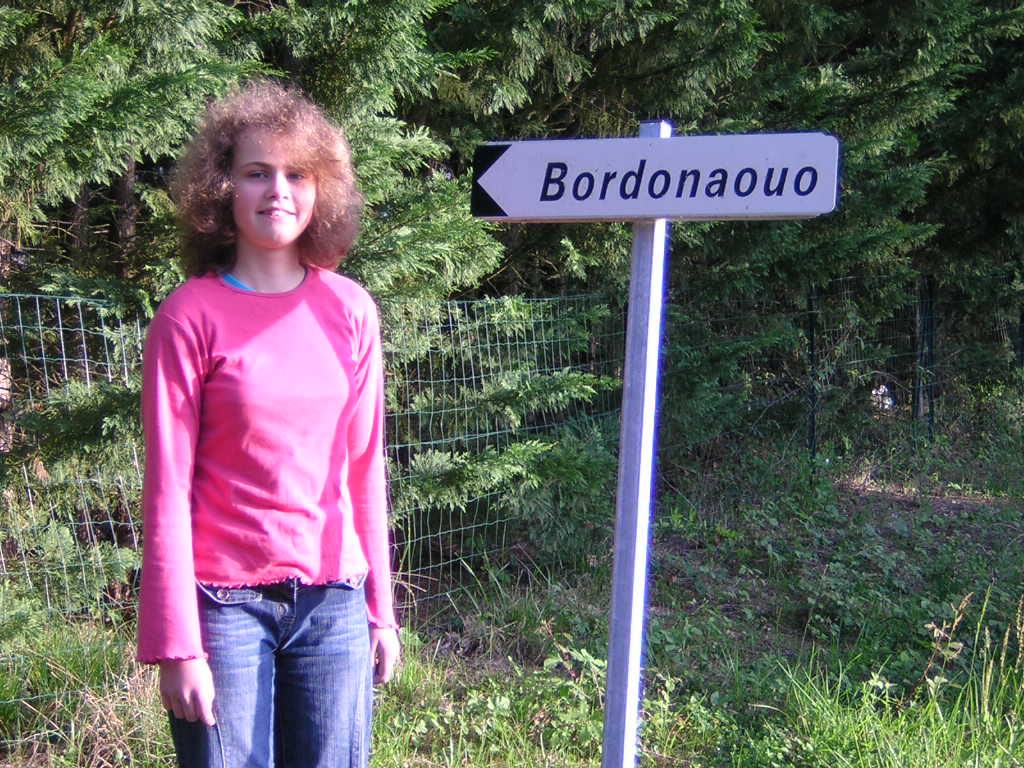
Me in front of our first house in France. I had also suffered an unfortunate haircut on our arrival.
My lack of understanding left me very othered for the first few months. The Scottish boy who was my interpreter was still a ten year old boy, and still found girls icky, so he wasn’t always much help. The friends I did make were mainly girls who pitied me. To repay them for their kindness, I traumatized them by inviting them to my house for my birthday and serving them jacket potatoes and jelly (aggressively British staples).
How did you learn French?
As for learning French, I picked up a lot contextually, and helpfully the teacher would write out every lesson on the board for us to copy. There were also posters of grammar rules all over the walls, which, when I inevitably began daydreaming, I internalized, making me a real stickler on French grammar now.
All in all, after a year of school, I had enough French to make myself understood and I had passed the phase of being able to understand people but not reply. This led me to become the family interpreter. I would be the one to call the phone company, the electric company, insurance companies – you name it. These interactions did have the helpful side effect of making me completely blasé about interacting with all levels of French bureaucracy. Boy, would that prove to be a valuable skill later in life.
What cultural differences did you notice?
The biggest culture shock in school for me was the conformity. While in the UK uniforms were mandatory, that was as far as conformism went. We were otherwise encouraged to think outside the box and come up with creative solutions. In France, not only was this not how it was done, it was discouraged. Tests didn’t test your knowledge as much as your ability to parrot back the exact lesson the teacher gave you. Once I cracked this code in the second year of middle school, I soared to the top of the class. However, my creative writing projects always threw my teachers curve balls. I can still remember the first one I participated in. My French was limited so I used basic vocabulary and poorly conjugated verbs, but the grammar was the least of my problems.
The subject was to complete a story. The beginning involved a Native American girl running for her life. Being the Doctor Who nerd that I was, I had her make the choice to jump into a canyon which was in fact a portal to the 21st century.
I can still see my teacher’s utterly bemused face as he handed my paper back, and said to me in English “Very Interesting”. I was used to losing marks for writing too much, but not for my story being too creative.
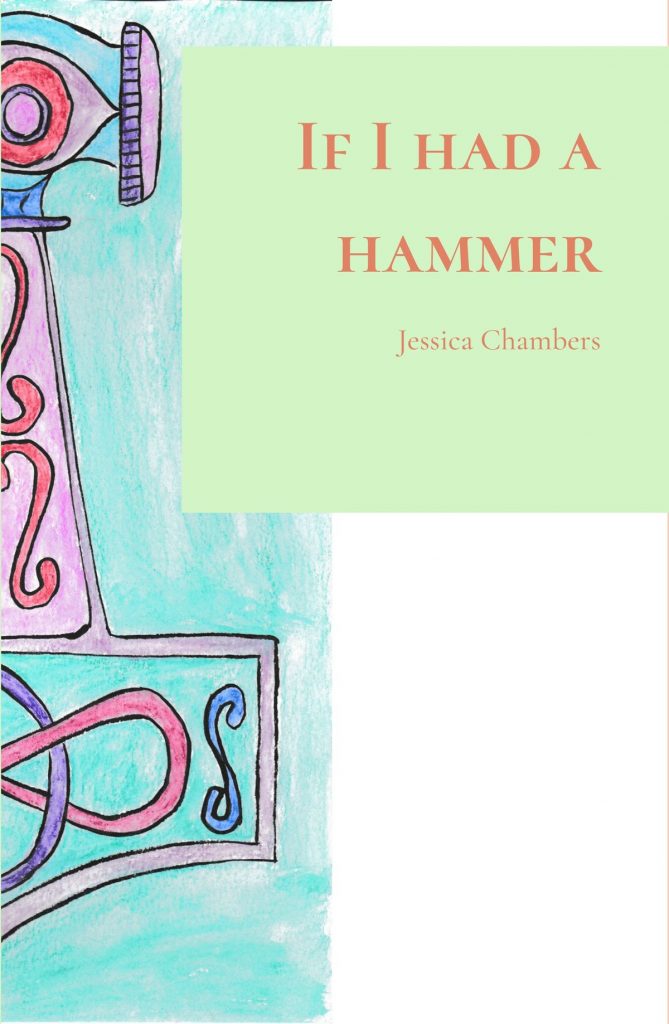
It’s no wonder I ended up writing a novel in high school – I needed an outlet – If I Had A Hammer
This set a precedent for the rest of my school life until I passed my French baccalaureate. Obviously I took the creative writing subject, and got a highly commendable 15/20 (in France, all grades are out of 20).
But how did it affect you?
On a more personal level, the move probably hit my self-confidence hardest. In the UK, I was bold, participating in school plays and questioning teachers. I had a reliable circle of friends who loved me despite my quirks. In France, I was too much of a tomboy, I didn’t look, dress or act like the other girls. (Southern) French girls are notoriously petite – whereas I had had a growth spurt during the move, stood a head taller than all of them and had been hit by puberty rather precociously.
To top it off, despite my best efforts, public speaking was now my worst fear.
I can pinpoint the moment I stopped speaking in public. French class in the first year of middle school (6°) the professor asked me to read some lines from a theater piece we were studying. The piece was familiar as we had studied it in primary school, so I gladly volunteered. I had the strongest English accent at that time. The problem with accents is that you can never hear your own. Everybody else heard it, though. As I read the text, the class slowly but surely erupted into giggles. The professor eventually joined them and had to excuse himself. From then on, it was a regular occurrence for my classmates to mock my accent.
I didn’t speak publicly until the final year of middle school (3°), four years later, when I participated in the theater club, with the most minor roles I could get away with.

My fellow classmates on stage
How did you come back from that?
My confidence began its return after 6 years, in my second year of high school when I made my now best and dearest friends. I participated in the AV club and in their homemade film productions. My friends often typecast me as the foreigner, as I never truly lost my accent.
I specialized in engineering early on, meaning I was suddenly surrounded by like-minded people. Almost entirely boys, who I must admit are less judgmental and more easily impressed than girls overall.
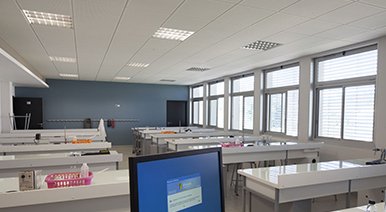
I found solace in STEM subjects, unrestricted by language barriers
What advice can you give someone who is thinking of moving with children?
All in all, the experience of moving to another country knocked me down to build me up again. The fact that this happened at such a tender age when enough children are struggling with their sense of self and confidence anyway did not help. Not to be cliche, but I don’t regret the experience. It made me who I am, and I’m a stronger and more well-rounded person for the experience. If you are thinking of moving to another country with children, try to do so sooner rather than later. At eleven, I struggled more than my sister who was seven at the time: she lost her English accent completely.
However, I cannot stress enough how important it is to keep speaking your native language(s) at home. My sister would gladly have dropped English if she could have, and our French teachers discouraged my parents from letting us watch English television. But without it, I wouldn’t still have the level of English you see before you.
Most of all, I would advise you to not worry about your children. They will pick up another language criminally easily and are more adaptable than one may give them credit for.


What a brilliant read. Thank you for sharing this. I see my son in your writing,its as if you are Writing ‘our’ own personal history here albeit My son starteD Primary here aT age 6 after MontessOri and Primary in the UK. Best of luck for your future. Thank you again.
Thank you so much! All the best to you and your son 🙂
A U.S. colleague married a German woman. He only spoke english to their children and she only spoke to them in german. They became beautifully and perfectly bilingual with no accents from either language. The best of 2 worlds!