
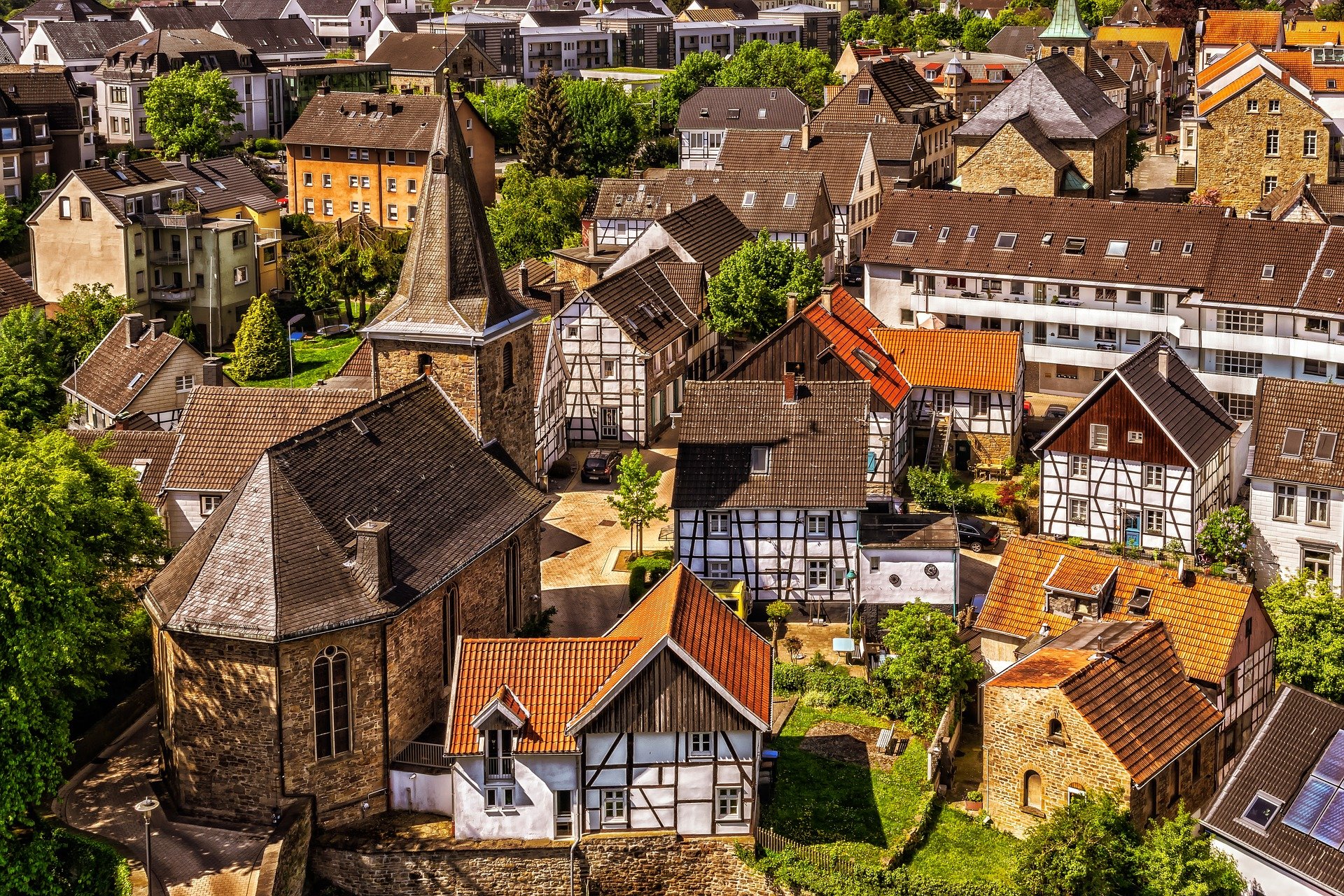
How is it to live there?
Life in Germany is relatively peaceful and safe. The country offers high-quality education, many employment opportunities, an excellent economy and a low corruption environment.
If you decide to move to Germany to find a job, you will probably find something quick. Moreover, the expenses are moderate compared to other European countries, plus you get a well-organized healthcare system and free education in return.
How is it to move there?
You will need a visa to move to Germany if you come from these countries (See what kind of Visa do you need). There are few possible ways on which you can obtain your visa as an immigrant moving to Germany. The valid reasons include employment, education, setting up a company and family reunion.
These are the types of available visas:
- Business Visa
- Visas to Study in Germany
- Job Seeker Visa
- Working Visa
- Guest Scientist Visa
- Training/Internship Visa
- Family Reunion Visa
Along with a visa, you will need health insurance that meets the German statutory laws. You also need to prove that you have enough funds to sustain yourself to live in Germany. Having a basic understanding of the German language is another prerequisite if you want to immigrate to Germany. However, you will need to have a C1 or C2 level of proficiency for a permanent residence.
German people
Respecting the rules and being on time seems to be inherent to Germans, and it is not something to joke about. They take their time schedule quite seriously. A great result of this is the efficient public transportation as it is flawless and always on time. Germans hold a high value for order and other people´s privacy. For this reason, rules on late-night noise are of prime importance, so make sure you respect the silence after 10pm during the weekdays.
With only a 35-40 hour work week, their productivity does not decrease at all. On the contrary, although the work efficiency is at an enviable level, Germans put much focus on their leisure time too. There is always time for unwinding because, for them, it is all about organization. Family time is very appreciated in Germany, so sharing time with loved ones is one of the most common ways they spend their free time. Meeting your friends or colleagues after a busy day to have a drink or two is something that will undoubtedly become one of your favorite habits.
Another very typical German thing is the passion for sausages, bread and beer. Germany is a second European country for the amount of consumed beer. So if you are a beer lover, this is a country for you.
Housing (rent vs. buying)
Monthly expenses in Germany are somewhat lower than in the other European countries, and the housing rent is the highest costs you will have. Over the last decade, rental and property costs increased significantly. Nonetheless, more than 50% of Germans live in a rental apartment. Approximately between 800 – 900 Euros per month should be enough to cover your rent in Germany depending on the city you live in.
South of the country, with Munich as the center, is the most expensive part of Germany. The average rent for a 1-bedroom apartment in the city center in Munich is around 1100 Euros. On the other hand, it is much cheaper to rent an apartment in the eastern part of the country. Leipzig is one of the most affordable German cities with an average rent of 490 Euros.
If you consider buying a property in Germany as a foreigner, the good thing is there are no restrictions, no matter if you are an EU or non-EU citizen. The average price per square meter in Munich would cost you 5,839 Euros for the apartment and 4,233 Euros for a house. Hamburg and Berlin are cheaper, with an average price of around 3,500 Euros for an apartment and 2,400 Euros for a house.
After finding the property, the process of buying is relatively short. To complete the purchase, you will need a notary to create the contract and register the property after you finalized the mortgage.

Education and kindergartens
Both kindergartens and the school system offer excellent programs with high-quality care for the children. Before starting compulsory education, children can go to nursery or kindergarten (pre-school). The nursery accepts kids from eight weeks to three years old, and the kindergarten from three to six years old. The cost of nurseries and kindergartens fluctuates in price depending on several factors: the area you live, offered program, and even your paycheck. Hence, if you earn less, it is possible to pay a reduced price for your kid.
Children attend compulsory primary school (Grundschule) when they are six years until ten or twelve years old. Then they continue to secondary school until they are 18 years old.
Germany offers an excellent higher education system. Even though some universities charge tuition for international students, most have a tuition-free policy. The only fee you might need to pay is the semester contribution, with an average of 250 Euros per semester.
Healthcare
The healthcare system in Germany is considered to be one of the most efficient in the world. From 2007, everyone is obliged to have health insurance, no matter if you are a German citizen or an expat living in Germany.
There are three options for healthcare insurance; public health insurance (GKV), private health insurance (PKV) or a combination of the two.
If you are employed and earn less than 64.350 Euros per year or 5.362 Euros per month, you can only have the GKV. In this case, you can purchase private health insurance only as a supplement to cover gaps that GKV does not include.
All GKV providers in Germany charge the same basic premium of 14.6% of your gross income, plus a supplemental charge of approximately 1.3 % of your gross salary for a monthly salary, not more than 4,425 Euros.
You can opt for private health insurance if:
- you earn more than the fixed amount of 5.362 Euros per month
- you are self-employed
- you are a student
However, if you are eligible for private health insurance as a foreigner living in Germany, have in mind that some international health insurance providers might not meet the standards of German law. So, make sure that you either find a suitable insurance plan or simply choose a German company.
Working in Germany
Germany has been an attractive working destination for many years. Due to its booming economy, the need for skilled workers does not decrease. In March 2020, Germany introduced the German Skilled Immigration Act through which it is possible to get a job as a foreigner even if a German or an EU citizen could perform this role.
Some of the job placements that need an extra workforce are software developers, IT experts, electrical engineers, electricians, business managers, nurses, architects, economists, business managers, customer advisors, sales representatives.
Regarding the education level, this Act brought changes in defining a qualified professional. Along with the professionals holding a university degree, non-EU citizens with a vocational training qualification acquired through a course that lasted at least two years are now recognized as qualified professionals as well. That means that the workers from non-EU countries can get employment in jobs where an academic degree is not required.

Fun facts about Germany
Now, I am aware that moving to another country is an exhausting and stressful process. With all the bureaucracy and legal requirements that you need to meet, the whole idea of moving might become even unattractive. Nevertheless, there are many perks and unique facts about Germany that will make you fall in love with the country. Here I bring you some of the most interesting fun facts about Germans and Germany that will make you laugh and possibly strengthen your desire to move there as soon as possible. So here are some traits that I found interesting:
- Most of the German highways have no speed limit.
- German is the most widely taught as third language worldwide
- Donaudampfschifffahrtselektrizitätenhauptbetriebswerkbauunterbeamtengesellschaft with 79 letters is the longest word
- Germany has more than 300 different kinds of bread and over 1,000 kinds of sausages
- Beer is considered a food in Bavaria
- The size of the beer glass on the famous Oktoberfest is 1 liter
- Prostitution is legal in Germany
- The country pays for sex for the disabled people
- Everything closes on Sunday
- Germans think that the draft will kill you, but the fresh air cures all illnesses
- Showing your middle finger is illegal
- It’s bad luck to wish someone “Happy Birthday” in advance


0 Comments